

Most pool owners in Collin County assume a weekly service is a one-way arrangement: the technician shows up, balances the water, and leaves a clean pool behind. That is only half of it. The pools that stay clear all summer are almost always the ones where the homeowner and the technician are working from the same information.
I’m Luke Bird, owner of Hamilton Pools. We service pools in Allen, McKinney, Frisco, and the surrounding North Texas communities, and after years of doing it, I can tell you which small habits separate a trouble-free pool from a frustrating one. None of them are difficult. Here is what we ask of our customers, and why each item matters.
Keep the Water Level Where It Belongs
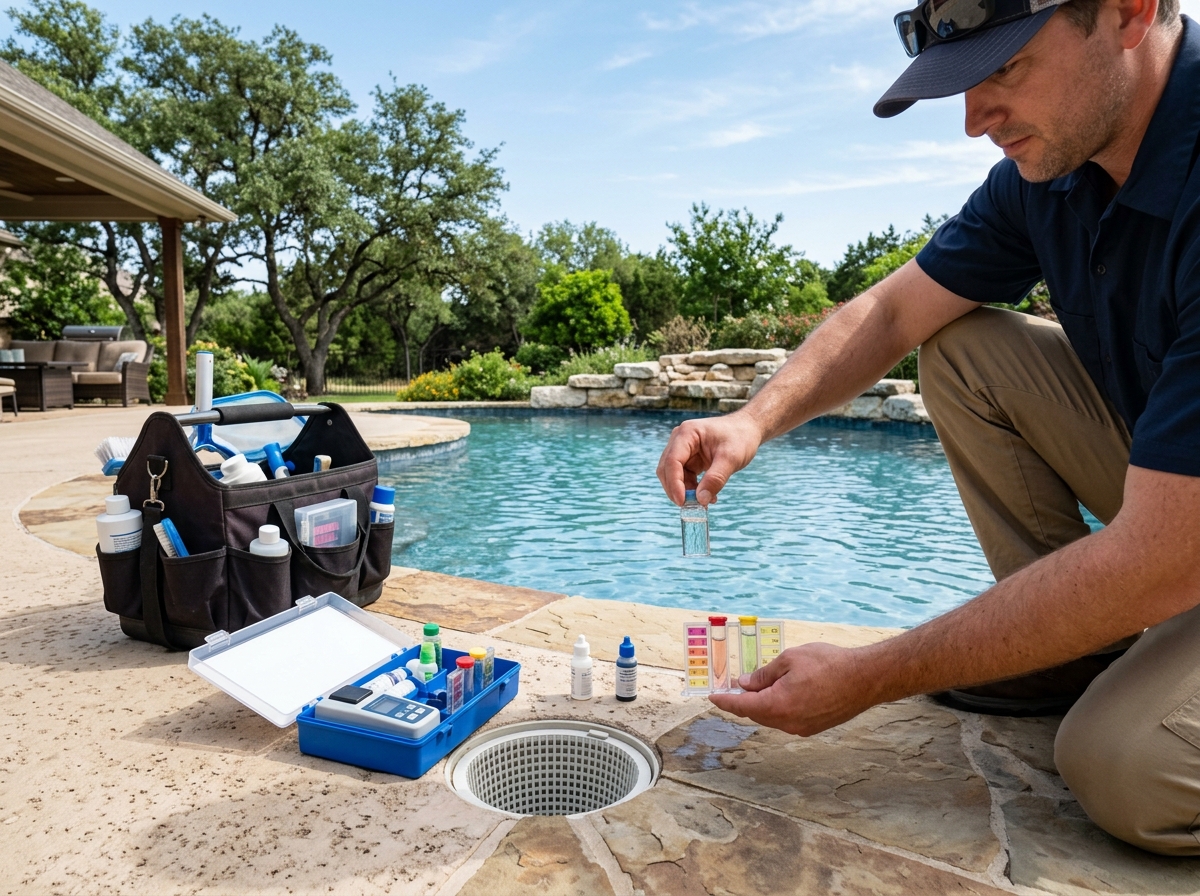
Water level is the simplest thing you can watch and one of the most expensive to ignore. The water line should sit around the middle of the skimmer opening. When it drops below the bottom of the skimmer, the pump starts pulling air instead of water and can run dry, which burns out the motor quickly.
North Texas summers make this a real risk. Evaporation in July can take an inch or more off the pool in a few days, and a small leak nobody has noticed makes it worse. One customer in Plano left for a week with a faulty autofill. By the time we arrived, the Pentair WhisperFlo pump was loud and running hot, and the motor had to be replaced. Our pump, heater, and motor repair team handles jobs like that, but a repair bill is a poor substitute for thirty seconds with a garden hose.
How to Check It
Look at the skimmer opening. If the water sits below the middle, add water until it is back in range. If you find yourself topping off every few days, tell us, because that pattern can point to a leak worth investigating.
Always keep your pool’s water level in the middle of your skimmer opening to protect your pump from running dry.
Tell Us About Heating and Parties
Pool chemistry shifts with use, so we need to know when use changes. If you are heating the entire pool for a weekend, or hosting a party, please let us know before your service day.
Warm water burns through chlorine faster and pushes pH and alkalinity around more quickly. If we don’t know the heater has been running all week, we may under-dose, and a pool that looked fine on Monday can turn cloudy by Friday. Parties have a similar effect. Sunscreen, body oils, and a crowd of swimmers consume a lot of chlorine in a short time. A quick text ahead of time lets us add extra shock or adjust pH so the water stays balanced. After a particularly large event, a one-time pool cleaning may be the fastest way to reset the water.
If Your Dogs Swim
Dogs are welcome customers, and they do change the chemistry. Hair, dander, and whatever they carry in from the yard use up chlorine quickly. If your dog swims regularly, tell us, and we will factor it into the dosing. It takes us very little effort to adjust, but it makes a noticeable difference to the water when we know.
Filter Cleaning Is the Most Important Job
If I could get customers to do only one thing, it would be this one. The filter traps the fine particles that make water cloudy, and everything else in the system depends on it flowing freely. Regular professional filter cleaning does more for water clarity than any chemical we add.
As a general rule, cartridge and DE filters need a deep cleaning every three to six months. Your pool’s size, the number of trees nearby, and how heavily it is used can move that number in either direction. Sand filters are backwashed more often, and the sand itself is usually replaced every five to ten years. A neglected filter restricts flow, makes the pump work harder, and eventually leads to cloudy water or equipment failure. I have pulled cartridges out of a Hayward C4030 in Murphy that were so caked with debris they looked like concrete. The pool was green, and the owner could not understand why.
| Filter Type | Recommended Deep Cleaning Frequency | Common Issue When Neglected |
|---|---|---|
| Cartridge | Every 3-6 months | Reduced flow, cloudy water, pump strain |
| Diatomaceous Earth (DE) | Every 3-6 months | Clogged grids, high pressure, inefficient filtration |
| Sand | Backwash weekly/bi-weekly; sand change every 5-10 years | Poor filtration, algae growth, channeling |
We keep track of each customer’s filter schedule, but it helps when you tell us that you know it has been a while. Spraying a cartridge with a hose only removes surface dirt. Getting into the pleats takes a proper cleaning solution and some pressure.
Keep the Yard and Pool Deck Clean
We need a clear, safe path to the pool and the equipment pad. Dog waste and heavy mud on the deck are the two most common problems. They make the work slower, they are unpleasant and unsafe to walk through with a full cart, and they wash straight into the water, bringing bacteria and dirt with them.
A clean yard shortens our visit and keeps the pool cleaner between visits. I have lost count of the times a technician has stepped somewhere in Sachse that they would rather not have.
Put the Dogs Up on Service Day
Please secure your dogs before we arrive. Our technicians work in the backyard with gates open and equipment moving around, and even a friendly dog can become anxious around strangers on its own territory. Keeping pets inside or in another part of the yard for an hour or so protects them, protects our staff, and keeps curious paws away from chemicals and machinery.
We run set service days by area, for example Mondays in Prosper and Tuesdays in Lucas, so once you know your day, it is easy to build a routine around it.
Give Us Easy Access to the Backyard
Our service carts hold brushes, nets, vacuum poles, chemicals, and testing kits. They have to fit through your gate, and the path behind it has to be clear. A narrow gate, or one blocked by a parked car, slows every visit and sometimes prevents one.
Gates, Latches, and Codes
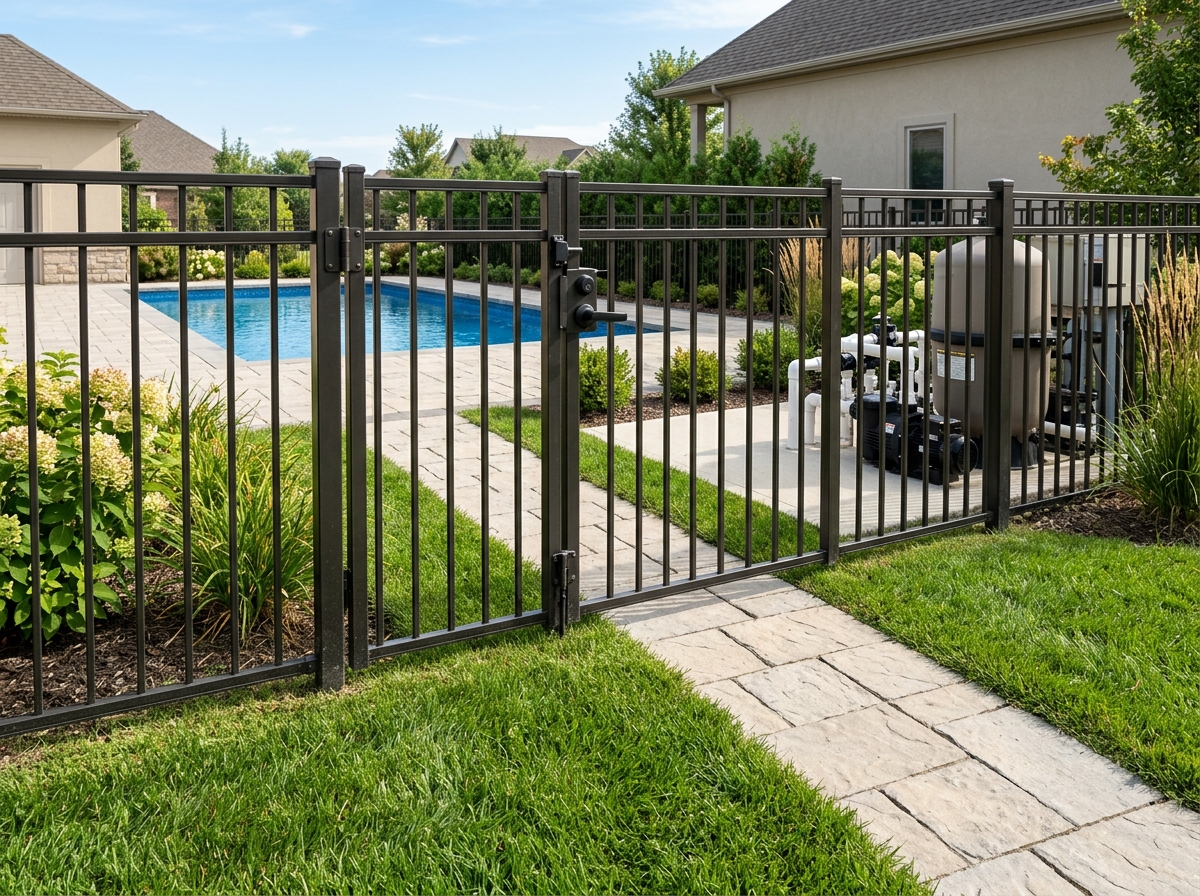
Please keep your fence and gate latches in good working order. A broken latch is more than an inconvenience for us. It is a safety issue for your family and your neighbors, especially with young children around. The Consumer Product Safety Commission’s Pool Safely guidance treats secure barriers as a core part of pool safety for good reason.
If your gate uses a lock or keypad, make sure we have the current combination. Few things waste more time than a technician standing outside a gate that will not open. If you change the code, send us a quick text.
Park vehicles so they don’t block backyard gate access on your pool service day. Our carts need room.
Warn Us Before You Travel
If you are leaving town, tell us as early as you can. A message on Sunday night for a Monday morning departure leaves us no time to plan, and if we cannot get into the yard on Monday, the visit is missed.
Advance notice lets us plan properly. For a two-week trip in July, we can confirm the autofill is working, add an extra check, or adjust the schedule around a stormy forecast. Pools in Parker have turned green in just a few days of North Texas heat when something went wrong and nobody was watching. An email a week before you leave is enough, and it is easy for us to act on.
A Quick Checklist for Service Day
Most of what we have covered fits into a short list you can run through the night before your technician arrives. It takes about five minutes, and it removes the most common reasons a visit runs long or gets cut short.
- The water level sits near the middle of the skimmer opening.
- You have told us about any heating, parties, or regular swimming by dogs.
- The filter has been cleaned within the last three to six months, or a cleaning is on the schedule.
- Dog waste and mud have been cleared from the deck and the path to the equipment pad.
- The dogs are inside or in another part of the yard.
- The gate opens fully, the latch works, and we have the current code.
- No vehicles are parked in front of the gate or the side yard.
Customers who follow this list rarely have a missed visit, and their pools tend to need fewer corrective treatments. The time we save on access and guesswork goes back into the parts of the job that actually improve your water.
Why Hard Water Makes All of This Matter More
Collin County gets its water from the North Texas Municipal Water District, and it is hard, with a lot of dissolved calcium. That calcium can leave scale on your pool surfaces and inside your equipment when the water is not kept in balance.
If you notice white, crusty buildup along the tile line or inside your heater, tell us early. Left alone, scale can damage plaster and clog a heater’s heat exchanger. We work hard to prevent it through balanced chemistry, and when it has gone too far, a professional acid wash is often the only way to restore the surface.
A clear pool is the result of a shared effort. When you keep the water level up, tell us about changes in use, keep the filter on schedule, and make the backyard easy to work in, your weekly pool maintenance visits get faster, the water stays cleaner, and problems get caught before they turn into repairs.