
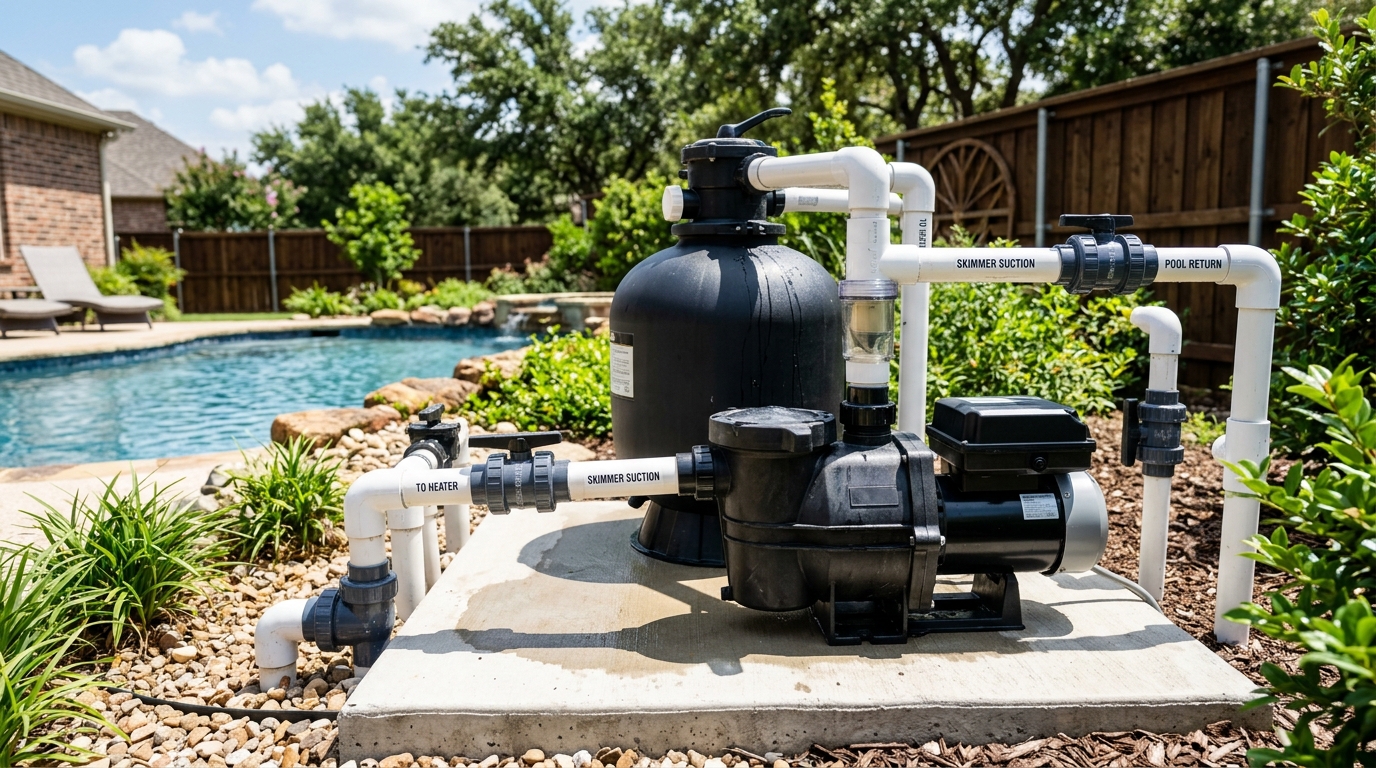
Why Your Pool Equipment Acts Up (and What to Do)
Taking care of a pool in North Texas means dealing with some unique challenges. The scorching summers really push equipment hard, and then you get those sudden freezes that can cause all sorts of damage. Plus, our water from the North Texas Municipal Water District (NTMWD) is known for being pretty hard, which means calcium and other minerals love to build up in your pumps and heaters.
I’ve seen it all working with Hamilton Pools in places like Allen, McKinney, and Frisco. A lot of times, when something goes wrong with a pump, heater, or motor, it’s tied back to these local conditions. Knowing what to look for can save you a lot of headache and sometimes even a big repair bill. Here’s what I run into most, why it happens, and where the line sits between a five-minute fix and a call to us.
When Your Pool Pump Isn’t Pumping
Your pool pump is the heart of your system. It keeps the water moving, which is important for cleaning and chemical distribution. When it stops working right, the whole pool suffers.
Common Pump Problems and What They Mean
You’ll notice pretty quickly if your pump isn’t working like it should. Sometimes it’s obvious, like it’s not turning on at all. Other times, it’s more subtle.
Heads up
Always turn off the power to your pool equipment at the breaker before you start poking around. Electricity and water don’t mix, and safety comes first.
Pump Won’t Turn On or Trips the Breaker: This one’s common. Flip the switch, nothing happens, or the breaker trips right back. A few things to check. First, look at the breaker itself. Sometimes they just trip from an overload, especially with older wiring or during a power surge. If it trips repeatedly, though, that’s a sign of a bigger electrical problem, often with the motor itself. I had a customer in Prosper after a hard freeze call us because their Pentair pump kept tripping the breaker. We found a cracked fitting letting water spray onto the motor, shorting it out. It wasn’t the motor’s fault, but the damaged plumbing.
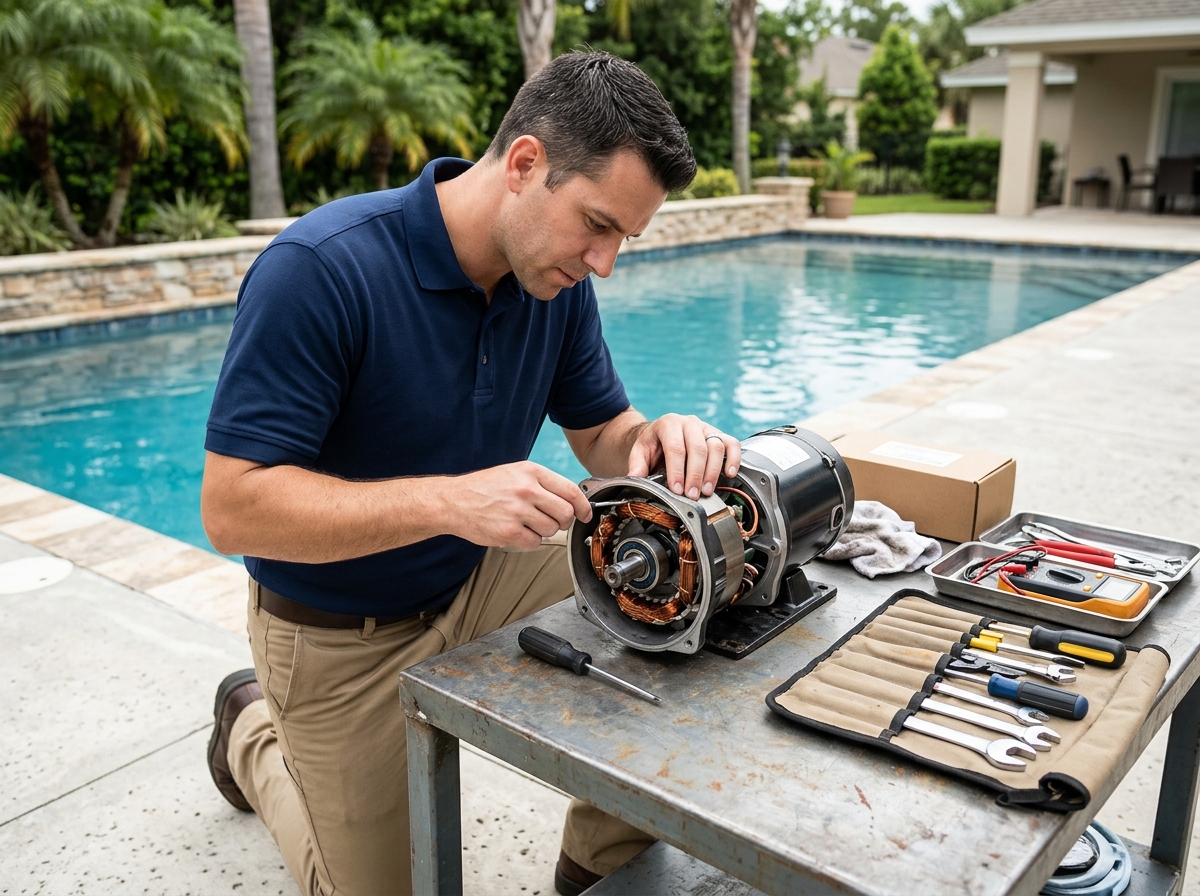
Pump is Humming But Not Spinning: This is a classic sign of a seized motor. You’ll hear the motor trying to run, but the impeller, the part that pushes the water, isn’t turning. This usually happens because something is blocking the impeller, or the motor bearings are seized up. In Plano, we had a Hayward Super Pump doing this. We opened it up and found years of hard water scale had built up, essentially gluing the impeller in place. A good filter cleaning can sometimes prevent this kind of buildup because it improves water flow and reduces strain on the pump.
Then there’s weak flow. Skimmers not pulling like they used to, returns feeling weak. That’s usually a clogged skimmer basket, a dirty pump basket, or a filter that needs attention. Could also be an air leak on the suction side. Or the impeller’s damaged, though honestly, clogged is what we find nine times out of ten. Damaged is rare.
Loud Noises Coming from the Pump: Pumps hum. They don’t scream. Grinding, squealing, rattling, that’s the motor bearings or the impeller talking. Bearings wear out over time, and our heat plus hard water speeds that up.
When to DIY and When to Call Hamilton Pools
Some pump problems are pretty straightforward for a homeowner to fix. Clearing out a clogged pump basket or skimmer basket is easy enough. If you have a multiport valve on your filter, backwashing it can also help with weak flow.
However, if the breaker keeps tripping, the motor is humming but not spinning, or you hear loud grinding noises, it’s usually time for a professional. Electrical issues can be dangerous, and messing with motor bearings or impellers without the right tools and know-how can make things worse. We handle these kinds of pool repair services all the time.
Tackling Pool Heater Headaches
Even with our Texas heat, a good pool heater extends your swimming season. When they don’t work, it’s a real bummer. Heaters are complex, and many problems need a certified gas technician.
Common Heater Issues I See
Heaters have a lot of safety features, so they’ll often shut down or refuse to ignite if something isn’t quite right.
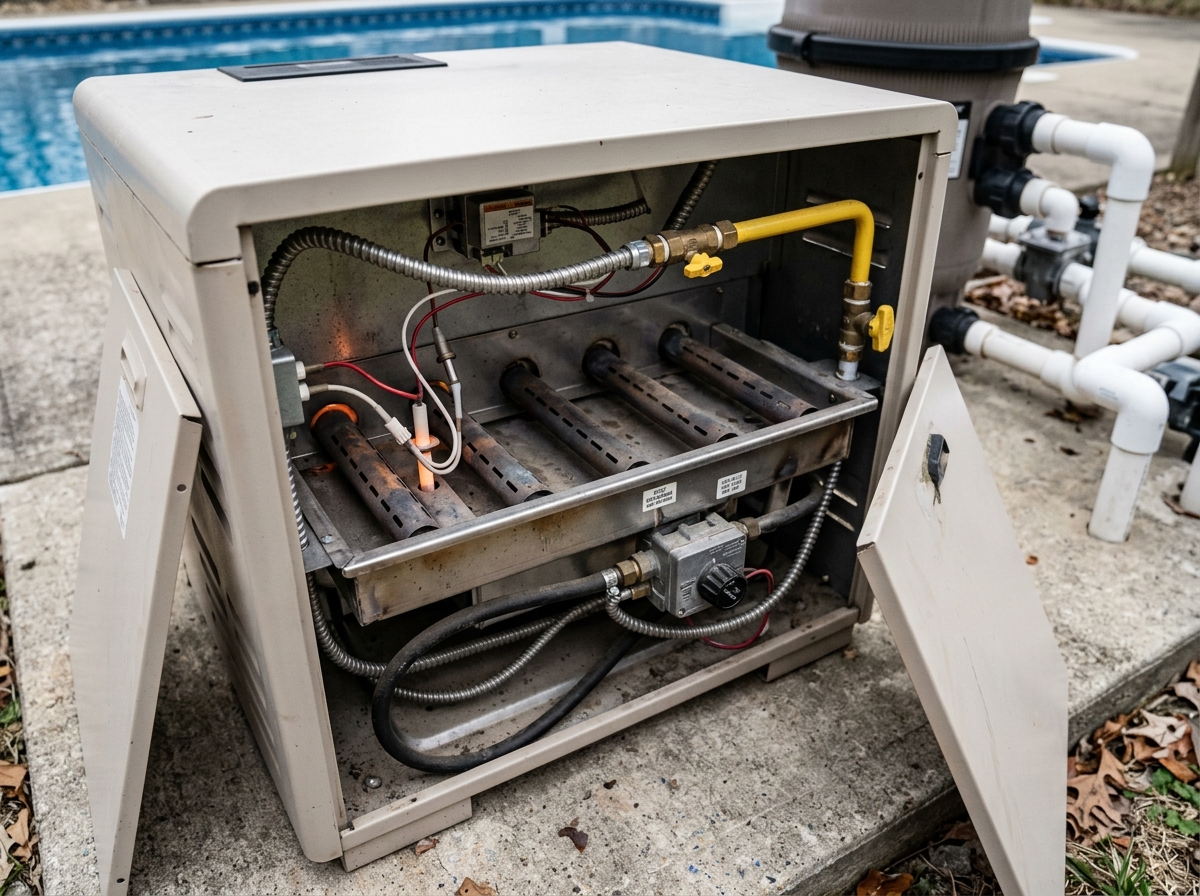
Heater Won’t Ignite: This is the most frequent complaint. You turn it on, the fan comes on, but you don’t hear that “whoosh” of the burner igniting. Usually it’s one of five things.
- No Gas Flow: Check your gas supply. Is the valve open? Has your gas utility had an outage?
- Dirty Igniter or Sensor: The igniter gets hot to light the gas, and a sensor confirms it. If either is dirty or faulty, the heater won’t light.
- Clogged Air Intake: Heaters need proper airflow to mix with the gas. I’ve seen Raypak heaters in McKinney that wouldn’t ignite because pollen and cottonwood fluff from spring had completely clogged the air intake screens.
- Pressure Switch Issues: Heaters have a pressure switch that makes sure water is flowing through them before they’ll fire up. If your pump isn’t working right or your filter is really dirty, the pressure might be too low, and the heater won’t ignite.
- Ventilation Problems: If exhaust fumes aren’t clearing properly, safety sensors will shut the unit down.
Short cycling is another one we see a lot: the heater lights, runs a few minutes, shuts off, then tries again. Usually low water flow is the culprit (dirty filter, pump trouble), though a heater that’s the wrong size for the pool or a bad temperature sensor can do it too.
Low Heat Output or Takes Too Long to Heat: If your heater is running but not getting the water warm, or it’s taking forever, it could be several things. The heat exchanger might be scaled up from our hard water, reducing its efficiency. The gas pressure could be too low, or the burner orifices might be partially clogged.
DIY vs. Professional Heater Repair
For homeowners, the main DIY task for a heater is usually cleaning debris from the air intake screens or ensuring the gas valve is open. You can also make sure your pump and filter are running well, as that impacts water flow to the heater.
Beyond that, heaters involve gas lines and high voltage electrical components. Anything related to gas pressure, igniters, sensors, heat exchangers, or internal wiring needs a certified, licensed professional. This isn’t just about getting it fixed; it’s about safety. Gas leaks and improper electrical connections are serious.
When Your Pool Motor is Acting Up
The motor is what drives the pump. It’s often where the real problems are when a pump isn’t working. Motors take a beating in our climate.
Typical Motor Troubles
Motors have windings, bearings, and electrical connections that can fail. The main issues often revolve around electrical problems or mechanical wear.
Motor Trips GFCI Breaker: This is a really common and frustrating problem. GFCI (Ground Fault Circuit Interrupter) breakers are safety devices designed to trip if there’s an electrical leak to ground. If your pool pump motor trips the GFCI, it means the motor housing or internal windings are likely compromised, allowing current to escape. I’ve seen customers in Frisco keep resetting a tripped GFCI over and over, ignoring the problem, until the motor windings burned out completely. This is a clear sign you need to kill the power and call a pro.
Motor Is Loud (Grinding, Squealing): As mentioned with pumps, these noises almost always point to bad motor bearings. Bearings are sealed, but over years of constant running, especially in the heat, they wear out. When they do, they make a terrible racket. Sometimes you can replace just the bearings, but often it’s more cost-effective to replace the whole motor.
Motor Overheating: Smell burning, or the housing’s too hot to touch? That’s overheating, and it happens fast from low voltage, running dry, a clogged impeller working too hard, or bad windings. It damages the motor quick, so don’t let it run like that.
And if there’s nothing at all, no hum, no sound, just silence, check the breaker first. Breaker’s fine? Could be a bad capacitor, a wiring problem, or the motor’s just done.
When It’s Repair vs. Replace
When a motor or pump assembly is failing, one of the biggest decisions is whether to repair it or replace the whole unit. Here’s a quick guide we use.
| Problem Type | Likely Cause | DIY Potential | Pro Repair/Replace |
|---|---|---|---|
| Pump won’t start, trips breaker repeatedly | Electrical short, seized motor, bad capacitor | Check breaker reset once | Pro diagnosis, motor repair/replace |
| Pump hums, no spin | Seized impeller, bad bearings | Clear pump basket, inspect impeller for debris (power off!) | Pro impeller/bearing replacement, motor replace |
| Weak water flow (pump-side) | Clogged baskets, dirty filter, air leak | Clean baskets, backwash filter | Pro leak detection, filter clean/repair, pump seal/impeller replace |
| Heater won’t ignite | Clogged intake, no gas, sensor fault, pressure switch | Clear external debris, check gas valve | Pro diagnosis (gas licensed tech needed) |
| Heater short cycles | Low water flow, sensor issue, improper sizing | Ensure pump running, clean filter | Pro diagnosis (gas licensed tech needed) |
| Motor trips GFCI | Internal electrical short, winding damage | None (immediately call pro) | Pro motor repair/replace |
| Motor is loud (grinding/squealing) | Worn motor bearings | None | Pro bearing replacement or motor replacement |
For most motor issues beyond a simple breaker reset, it’s usually a job for a pro. Especially with older motors, replacing just the bearings or a capacitor can sometimes be a temporary fix. If the motor is old, say 7-10 years, and it’s something internal like windings, a full motor replacement or even a whole new pump might be the better long-term choice. Newer variable speed pumps from brands like Pentair, Hayward, and Jandy can also save you money on electricity in the long run.
Worth knowing
Sometimes, what looks like a motor problem is actually caused by a dirty filter or a clogged salt cell. Regular salt cell cleaning and filter maintenance reduce strain on your whole system.
Preventative Maintenance is Key
A lot of these problems can be avoided or at least delayed with good preventative maintenance. Regularly cleaning your pump and skimmer baskets is a must. Checking your filter pressure and doing a full filter breakdown and inspection at least once a year will help your pump work efficiently. Also, keeping an eye on your water chemistry, especially calcium hardness, helps prevent scale buildup in both your pump and your heater.
For more detailed information on specific equipment, you can always check out Pentair’s own self-help resource center, and other manufacturer websites. They often have manuals and troubleshooting guides specific to their models.
If gas or exposed wiring is involved, that’s not a DIY afternoon, that’s a professional. Same three or four culprits (our heat, our hard water, the odd hard freeze) show up on equipment pads from Plano to Frisco to McKinney. Most of it’s manageable once you know what you’re looking at. The rest, less so.