White Buildup on Your Pool Tile? What Causes Calcium Scale (and How to Remove It)
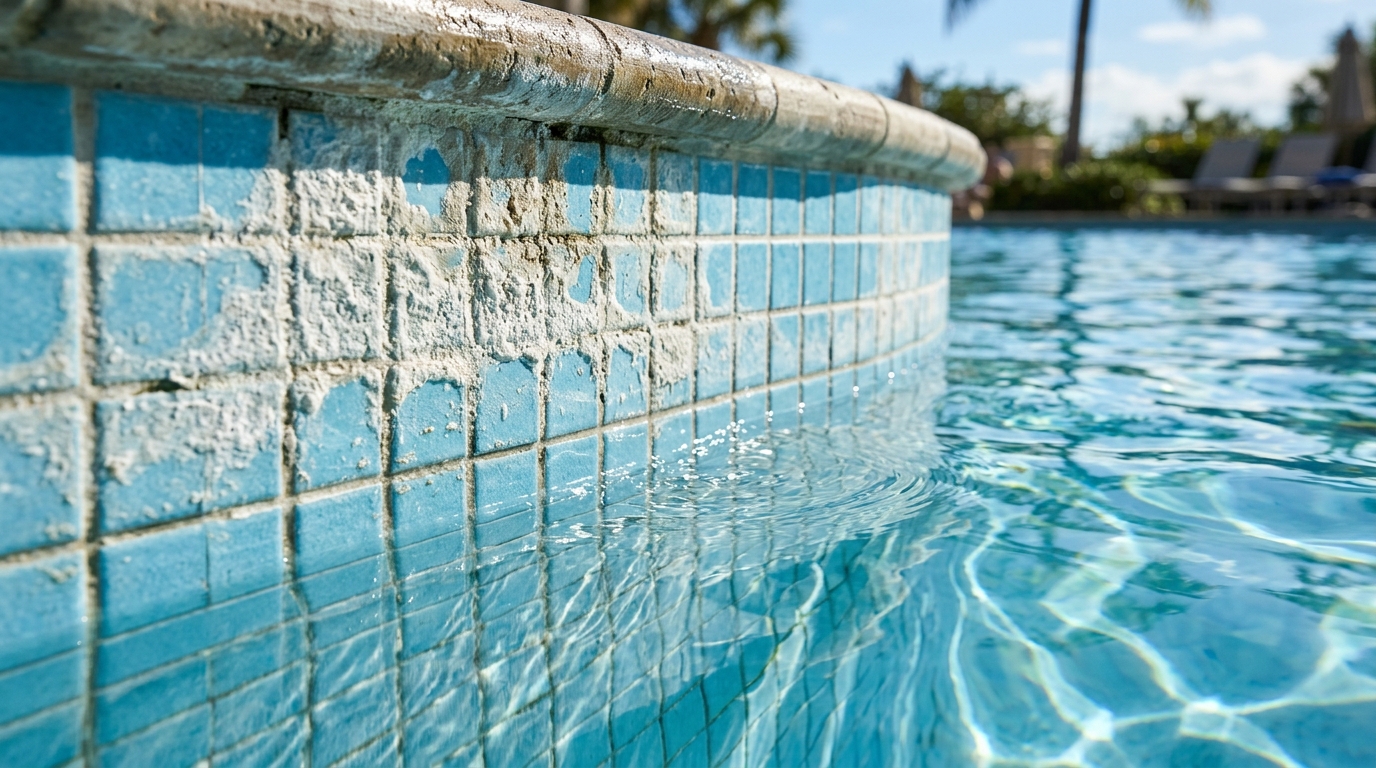
If you own a pool here in Collin County, chances are you’ve seen that ugly white buildup on your pool tiles. It shows up right at the waterline, and it can make your pool look dirty even when the water is crystal clear. That stuff is called calcium scale, and it’s a common problem for us in North Texas.
Around here, we’re dealing with hard water from the North Texas Municipal Water District (NTMWD). Hard water just means it has a lot of dissolved minerals in it, especially calcium. When that water evaporates from your pool, it leaves those minerals behind. Over time, they build up on your tile, rocks, and even inside your pool equipment.
Why Calcium Scale Shows Up
Calcium scale forms when the water in your pool isn’t balanced right. It’s usually a sign that your calcium hardness, pH, or total alkalinity levels are too high. Think of your pool water as trying to hold onto all those minerals. If the water gets too “full” or the conditions are wrong, it starts dropping those minerals out, and they stick to surfaces.
Here are the main reasons you’ll see scale:
High Calcium Hardness: This is the big one, especially with our local water. If you have too much calcium already in the water, it’s going to build up faster.
High pH: Your pool’s pH level tells you how acidic or basic the water is. If the pH gets too high (above 7.8), the water becomes basic. This makes calcium less soluble, meaning it’s more likely to come out of the water and form scale.
High Total Alkalinity: Total alkalinity acts as a buffer for pH, keeping it steady. But if total alkalinity gets too high, it can pull the pH up with it, leading to scale.
High Water Temperature: In our scorching Texas summers, hotter water can also make calcium drop out of solution more easily. This is why you often see more scale problems when the heat really kicks in.
Evaporation: As water evaporates, the minerals stay behind. This concentrates them, increasing the chance of scale, especially at the waterline.
Worth knowing
Not all white buildup is the same. There are two main types of calcium scale: calcium carbonate and calcium silicate. Calcium carbonate is usually easier to deal with, while calcium silicate is tougher and needs more aggressive cleaning.
Calcium Carbonate vs. Calcium Silicate
Knowing which one you’ve got changes how you clean it. Carbonate and silicate don’t respond to the same treatment.
Calcium Carbonate: This is the most common type. It looks white, flaky, and sometimes chalky. It’s usually pretty easy to remove with acid-based cleaners. You can often scrape it off with a pumice stone or even a stiff brush and some vinegar if it’s not too bad.
Calcium Silicate: This type is much harder and denser. It usually looks grayish-white, and it feels like rough sandpaper. It’s also much harder to remove. Standard acid cleaners might not do much, and you often need a professional acid wash service or specialized blasting equipment to get rid of it. You can’t really tell the difference just by looking, but if the scale doesn’t budge with a little scrubbing and an acidic cleaner, you’re probably dealing with silicate.
How to Get Rid of Calcium Scale
Removing scale depends on how bad it is and what type it is. For minor buildup, you can often do it yourself. For tougher jobs, you might need help.
DIY Scale Removal Methods
If you’ve got some light calcium carbonate scale, here are a few things you can try:
Vinegar: White vinegar is a mild acid that can break down calcium carbonate. You can soak a rag in vinegar and drape it over the scaled area for an hour or so. Then, scrub with a stiff brush. This works best for small patches.
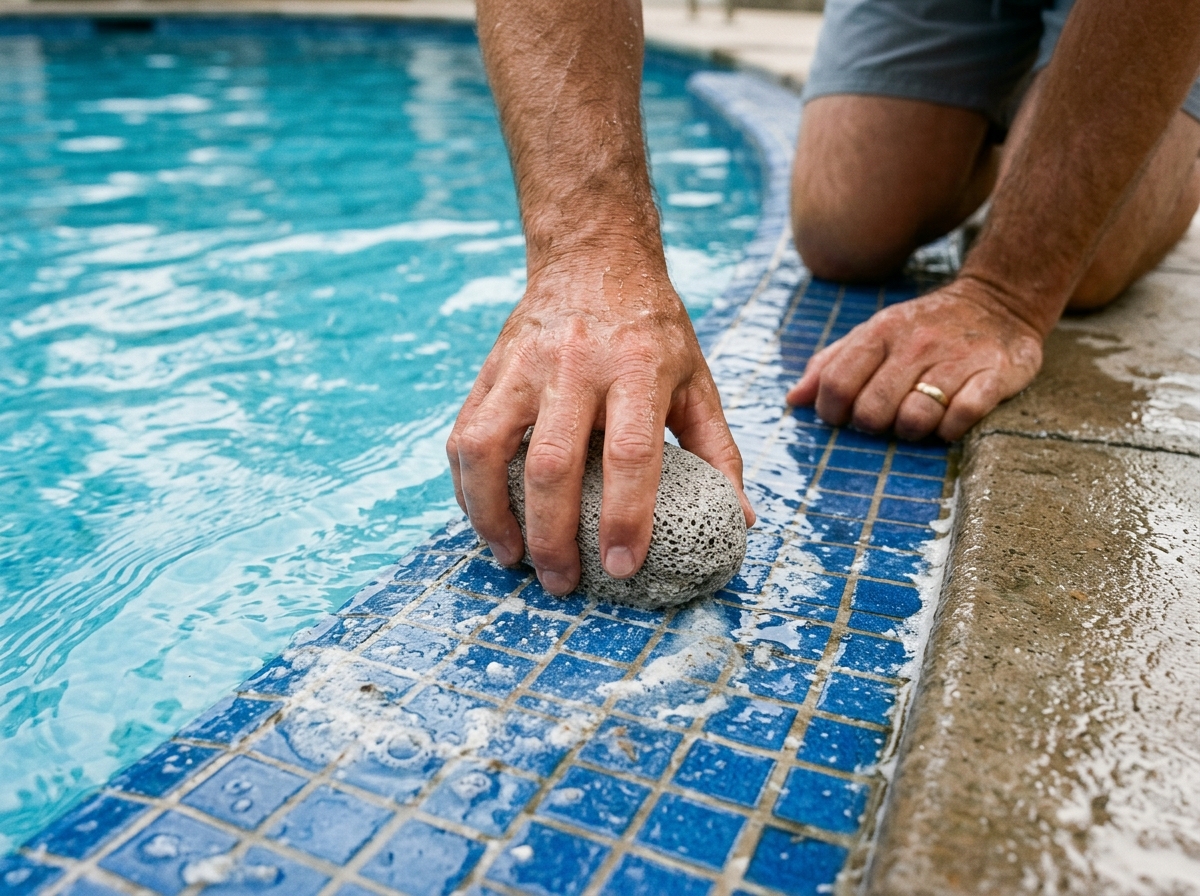
Pumice Stone: A pool-specific pumice stone can be effective for scrubbing scale off tile. Make sure the tile and the pumice stone are wet to avoid scratching the surface. It takes some elbow grease, but it’s pretty safe for most pool tiles.
Muriatic Acid (Carefully!): Muriatic acid is much stronger and more dangerous than vinegar. You have to dilute it properly and wear protective gear (gloves, eye protection, long sleeves). For spot treatment, you can often dilute it 1:1 with water. Apply it carefully to the scale with a brush, let it sit for a few minutes, then scrub and rinse thoroughly. Always add acid to water, never water to acid. I usually tell people to start with a much weaker solution, like 10:1 water to acid, and slowly make it stronger if needed. Even then, I’d try other methods first.
Here’s a quick comparison of common DIY methods:
| Method | Effectiveness (Carbonate) | Safety | Notes |
|---|---|---|---|
| White Vinegar | Good for light scale | Very safe | Non-toxic, inexpensive. Best for minor buildup. |
| Pumice Stone | Good for moderate scale | Safe (with water) | Requires scrubbing, can scratch if used dry. |
| Muriatic Acid | Excellent for heavy scale | Dangerous (corrosive) | Requires careful handling, protective gear, dilution. Use as a last resort for DIY. |
When to Call a Professional
Sometimes, DIY just isn’t enough. If you have widespread, thick scale, or if you suspect it’s calcium silicate, it’s time to bring in the pros. We’ve got specialized tools and stronger chemicals that can tackle the job safely and effectively. For instance, we might use a glass bead blasting method that removes scale without damaging the tile or grout. For really tough, widespread scale, an acid wash might be needed for the whole pool surface.
The Hidden Dangers of Scale Buildup
That white crust isn’t just an eyesore. It can actually cause real problems for your pool’s plumbing and equipment.
Heater Efficiency: Calcium scale loves to build up inside your pool heater’s heat exchanger. This acts like an insulating layer, making your heater work much harder to warm the water. That means higher energy bills and a shorter lifespan for your heater. We’ve seen plenty of Raypak and Pentair heaters need expensive repairs because of scale.
Salt Cells: If you have a salt chlorine generator, scale can build up on the plates inside the salt cell. This reduces its ability to produce chlorine, meaning you’ll have to clean the cell more often or eventually replace it sooner than you should.
Filters: Cartridge filters can get caked with scale, reducing water flow and filtering efficiency. This puts more strain on your pump and makes your water cloudy.
Plumbing: Over time, scale can narrow your plumbing pipes, reducing water flow and making your pump work harder.
Heads up
Ignoring scale isn’t just about appearance; it can lead to expensive pool repair bills down the road for your heater, pump, or salt system.
Preventing Calcium Scale: It’s All About Water Balance
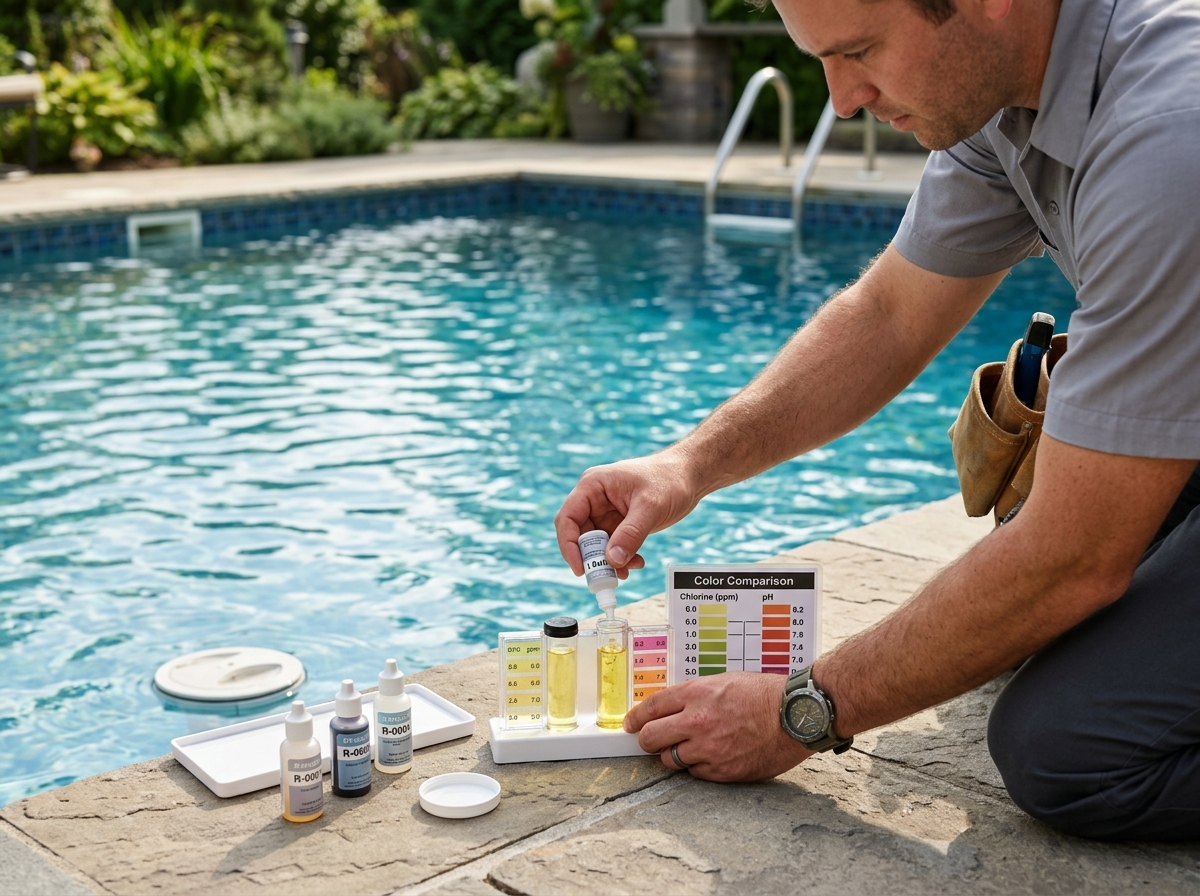
The best way to deal with calcium scale is to stop it from forming in the first place. This comes down to consistently keeping your pool water balanced. Here’s what I tell people: you need to test your water regularly and adjust your chemical levels.
Key Water Balance Targets
Here are the main levels you need to watch for here in Collin County, especially with our hard water:
Calcium Hardness: This is how much calcium is dissolved in your water. The ideal range is generally 200-400 parts per million (ppm). Given our water from the NTMWD, it’s common for us to deal with levels at the higher end or even above this range. You might need to dilute your pool water with fresh, softer water sometimes to bring this down, or use a calcium hardness reducer product. The Pool & Hot Tub Alliance (PHTA) industry water balance standards recommend these ranges for good reason.
pH: Keep your pH between 7.4 and 7.8. If it creeps up, use a pH reducer (like muriatic acid or dry acid) to bring it back down.
Total Alkalinity: This should be between 80 and 120 ppm. If it’s too low, you use an alkalinity increaser (like sodium bicarbonate). If it’s too high, you can lower it by adding muriatic acid or aerating the water.
Cyanuric Acid (CYA): While not directly causing scale, high CYA can affect your chlorine’s effectiveness, which impacts overall water health. Keep it between 30 and 50 ppm for outdoor pools.
Tips for Keeping Scale Away
- Test Your Water Weekly: Especially during the hotter months. Use a good test kit or strips. Bring a water sample to your local pool store if you want a detailed analysis.
- Adjust Chemicals Promptly: Don’t let your pH or alkalinity get too high and stay there. Small adjustments regularly are much easier than big corrections.
- Use a Scale Inhibitor: There are products specifically designed to bind with calcium and other minerals, keeping them dissolved in the water so they don’t form scale. These are often called sequestering agents. They don’t remove existing scale, but they help prevent new scale.
- Brush Your Pool Regularly: A good weekly brushing, especially along the waterline, can help dislodge early scale formation before it hardens.
- Dilute High Calcium: If your calcium hardness gets consistently high (over 400 ppm), the only real way to lower it is to drain some of your pool water and refill with fresh water. You might only need to drain a portion, not the whole pool.
Staying on top of your pool’s water chemistry takes some discipline, sure. But skip it for a month or two and you’re not just fighting stains anymore, you’re fighting your own equipment. That’s why a lot of homeowners in Allen, McKinney, and Frisco just hand it off to routine maintenance from Hamilton Pools instead. We’re checking and balancing your water every single week, so calcium, pH, and alkalinity stay where they belong before scale ever gets a foothold.
Keep an eye on that waterline. Catch calcium scale early and a rag soaked in vinegar handles it in twenty minutes. Let it sit for a season or two and you’re looking at a full acid wash, or a heater repair bill you didn’t plan for. Test your water, brush your tile, and it won’t get the chance to set up shop.